
Understanding what does porn do to the brain starts with understanding how the brain’s reward system works. Pornography triggers powerful neurochemical responses that can reshape how your brain processes pleasure, motivation, and everyday experiences. This guide explains the science behind how porn affects the brain, what happens with frequent use, and whether recovery is possible.
How the Brain’s Reward System Works
Before diving into how does porn affect the brain, let’s see the brain’s reward circuitry. It includes the dopamine spike, fueled by novelty, anticipation, and the fact that the brain is never fully used to it.
Dopamine is a key reason why people watch porn. It’s often called the “pleasure hormone,” but that’s misleading. Dopamine is actually the brain’s motivation and learning chemical. It signals “this is important — pay attention and remember this.” When you encounter something rewarding, your brain releases dopamine to reinforce the behavior and motivate you to seek it again.
Novelty is another thing that impacts the brain, as it responds strongly to new, unexpected, or surprising stimuli. They trigger larger dopamine releases than familiar ones. This makes evolutionary sense: discovering new resources increased survival chances.
Anticipation amplifies this effect and fuels why do people watch porn. When you expect something good but don’t know exactly when you’ll get it (like scrolling through content), dopamine spikes higher than if the reward were predictable. This creates a powerful loop: seek, find, spike, seek again.
Never enough is the critical part: the brain never fully adapts to novelty. While you might get bored with the same meal, introducing endless new options keeps dopamine firing. This is why buffet restaurants and endless-scroll platforms are so engaging — they exploit the brain’s sensitivity to variety.
How Porn Affects Dopamine and Reward Pathways
Study after study suggests porn is like a drug, dialing into your reward pathways and releasing chemicals like oxytocin and dopamine into your brain. Since neurochemical systems are mainly affected by porn-triggered dopamine and reward pathways, let’s explore what does porn do to your brain in this regard.
Research on dopamine response to pornography suggests pornography can trigger dopamine releases that rival or exceed those from natural rewards like food or social connection. Why? Because porn combines multiple dopamine triggers simultaneously: visual novelty with every click, sexual stimulation (one of the brain’s most powerful reward systems), anticipation during searching, and instant accessibility with no effort or social risk.
But is porn bad for your brain because of that? Well, unlike real-world sexual experiences requiring social skills and vulnerability, porn delivers intense stimulation immediately and endlessly. This creates an artificially amplified reward signal the brain wasn’t designed to process regularly.
This is why many people report spending far longer viewing porn than intended. The brain keeps seeking “just one more” in pursuit of that perfect dopamine hit, creating what researchers call a “seeking loop.”
With time, neural pathways associated with porn use strengthen, and the answer to is watching porn normal shifts too: the baseline for “exciting” moves upward, making everyday pleasures less satisfying by comparison. This is desensitization, and it’s a big part of why watching porn can be bad for you.
When the brain is repeatedly flooded with artificially high dopamine levels, it compensates by reducing dopamine receptors (fewer receptors mean less sensitivity), lowering baseline dopamine production, and increasing the threshold for arousal.
That’s how regular porn watching builds dopamine and reward pathways that lead to desensitization. That’s why frequent porn users often experience effects of porn on the brain as needing “more extreme” content over time to feel the same arousal they once experienced with less intense material. It’s neurobiology, as the brain is adapting to its environment.
What Happens With Frequent Porn Use Over Time
Reduced sensitivity to pleasure, changes in motivation and focus, and habit formation are what happens with regular, long-term use and why is porn bad for your brain.
1. Reduced Sensitivity to Pleasure
One of the most frequently reported effects of porn on the brain is anhedonia — reduced ability to feel pleasure from everyday activities. When your brain becomes accustomed to intense dopamine spikes from porn, normal pleasures start feeling flat by comparison.
This dopamine tolerance is why understanding how to stop watching porn is so hard. It creates a negative feedback loop: as everyday pleasures feel less satisfying, the pull toward porn becomes stronger. Many people describe feeling like they’re “going through the motions” in daily life while porn becomes increasingly central to their sense of reward.
2. Changes in Motivation and Focus
Does watching porn affect your brain‘s ability to stay motivated? Research on attention and motivation in frequent pornography users suggests yes, particularly with frequent use. When dopamine pathways become dysregulated from repeated high-intensity stimulation, tasks requiring sustained effort feel more difficult and less rewarding. The brain has been trained to prefer immediate, high-intensity rewards over delayed, effort-based ones.
The rapid-fire novelty of porn can condition the brain for constant stimulation. Focusing on single tasks for extended periods becomes harder. Some users report difficulty concentrating on books, conversations, or work without seeking distraction. Porn in relationships becomes a problem for them as well.
3. Habit Formation and Compulsive Patterns
The brain learns through repetition. Every time you follow the pattern — feel stressed, watch porn, feel relief — you’re strengthening a neural pathway. This is the cue, craving, reward loop that drives habit formation.
Over time, this loop becomes automatic. The cue immediately activates the craving, and before you’re consciously aware of deciding, you’re already reaching for your device. This is why is watching porn bad for some people — you’re working against ingrained neural patterns that make stopping harder than expected.
For some, porn use progresses beyond habit into compulsive territory, when understanding how to block porn becomes the only way out of a vicious cycle.
When Porn Addiction Becomes Destructive
Pornography addiction becomes destructive when it impairs psychological well-being, relationships, work performance, and overall quality of life, with recent research establishing strong associations between problematic pornography use (PPU) and mental health crises. Let’s see the exact destructive effects of pornography on the brain, including emotional regulation and well-being.
Porn, the Brain, and Emotional Regulation
One of the less-discussed arguments on how bad is porn for your brain refer to emotional regulation — how we process and manage our emotions.
Many people initially turn to porn for stress relief, and it can work short-term. The problem emerges when porn becomes the primary stress management tool. Instead of developing a range of coping strategies, the brain learns a single shortcut: feel bad, watch porn, feel better (temporarily).
This creates stress dependency, where the brain struggles to regulate difficult emotions without porn. Minor frustrations that most people navigate with resilience become triggers for compulsive porn use because the brain hasn’t developed alternatives to porn-related coping pathways.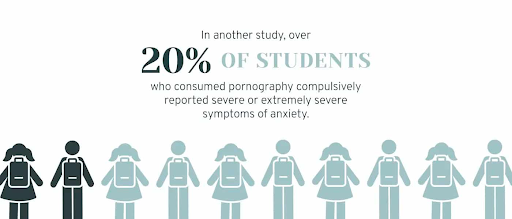
Porn and Mental Health: Depression, Anxiety, and Quality of Life
Beyond specific neurological effects of porn on brain function, there’s a broader question: is watching porn bad for you overall, considering mental health and well-being?
Research has found associations between frequent porn use and several concerns. Studies on porn use, depression, and relationship satisfaction show correlations between heavy porn use and higher rates of depression and lower relationship and sexual satisfaction. When porn use becomes compulsive, it can displace activities that genuinely contribute to well-being — social connection, exercise, hobbies, sleep.
For many, the most damaging aspect isn’t the porn itself but the shame, guilt, and secrecy surrounding it. Living a double life and feeling unable to stop despite wanting to can be psychologically devastating.
How Porn Affects the Developing Brain (Kids & Teens)
Children and adolescents are highly vulnerable, so it’s important to understand how porn affects the developing brain differently than it affects an adult one. Their dopamine system is highly active, which is why teenagers are naturally more risk-taking and sensation-seeking. This makes porn particularly powerful for young brains.
Being more impulsive, more reward-seeking, and less able to weigh long-term consequences, teens watching porn and children watching porn are especially responsive to porn-related novelty and reward. What might be moderately engaging for an adult brain can be overwhelmingly compelling for an adolescent one.
Beyond the neurochemical effects of pornography on the brain, porn exposure during developmental years can shape beliefs and expectations about sexuality, relationships, and bodies in ways that don’t match reality. Young people whose primary sexual education comes from pornography may develop distorted expectations about sexual performance, body image issues, a confused understanding of consent and boundaries, and difficulty with real relationships.
If you encounter this problem, your goal isn’t to shame young people or catastrophize porn exposure. Acknowledge that developing brains are more vulnerable and that early education, open conversations, and appropriate boundaries can make a significant difference.